For decades, the best weather forecasts in the world came from enormous supercomputers that simulate the atmosphere physics equation by physics equation, at vast expense. That hierarchy is now being challenged by artificial intelligence models that learned the patterns of the atmosphere from decades of past weather, and readers following the latest science and technology coverage will find the contest is closer than almost anyone predicted even three years ago.
The new models do not solve equations in the traditional way. Instead, trained on reanalysis datasets that reconstruct what the atmosphere actually did, they predict how pressure, wind, temperature and rainfall will evolve, often producing a ten-day global forecast in minutes on modest hardware rather than hours on a supercomputer. In head-to-head verification against observations, several systems now score as well as, and sometimes better than, the leading physics-based models on headline measures.
How the AI Models Caught Up So Quickly
The breakthrough was data as much as algorithms. Reanalysis archives combine satellite readings, weather balloons, aircraft reports, buoys and ground stations into a consistent picture of the atmosphere stretching back more than forty years, giving learning systems an unusually rich training set. Architectures borrowed from image and language modelling, adapted to work on a sphere rather than a flat grid, then proved remarkably good at capturing how weather systems grow, move and decay.
Cost is the second revolution. A forecast that once required a room-sized machine and a large electricity bill can now be run by a university group, a start-up or a national weather service in a developing country, and agencies such as the US National Oceanic and Atmospheric Administration are studying how learned models fit alongside operational systems. That democratisation matters, because the places most exposed to floods, heatwaves and storms are often those least able to afford traditional forecasting infrastructure.
Where Physics Still Holds the Advantage
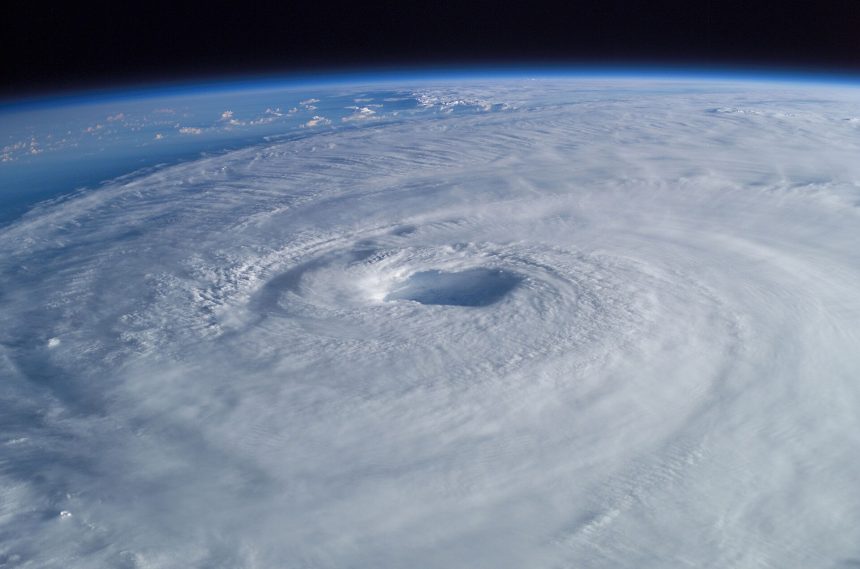
None of this means the supercomputers can be switched off. Physics-based models remain essential for understanding unusual events that sit outside the historical record, for resolving fine local detail in mountains and cities, and for providing the very data on which AI systems are trained and judged. Forecasters also warn that learned models can smooth out extremes, underplaying the sharpest rainfall peaks or the rapid intensification of a tropical cyclone, precisely the moments when accuracy matters most.
The emerging consensus, reflected across more news reporting, is therefore hybrid rather than replacement. Centres increasingly run both approaches side by side, using AI systems to generate large ensembles quickly, physics models to anchor the analysis, and human forecasters to interpret disagreement between them. When the two families agree, confidence rises; when they diverge, that divergence itself becomes useful information about uncertainty, which can be communicated to emergency managers rather than hidden behind a single deterministic line on a map.
What Better, Cheaper Forecasts Change
The practical stakes are large. Airlines can plan routes around turbulence and headwinds with greater confidence, farmers can time planting, spraying and harvesting around rainfall windows, and insurers and energy traders can price weather risk with sharper tools. Grid operators balancing wind and solar generation are especially keen customers, because a better forecast of cloud cover or a calm spell translates directly into fewer emergency purchases of expensive backup power.
The next contest is already visible: models that predict not just weather but its impacts, from river levels and flood streets to heat stress in a particular neighbourhood. Whoever builds those tools, the direction of travel is clear. Forecasting skill that once belonged to a handful of wealthy institutions is becoming a widely available utility, and the weather services that thrive will be those that learn to combine machine pattern-spotting with physical understanding and local knowledge.
None of this will be settled by a single spectacular forecast, good or bad. Trust in the new models will accumulate the way trust in their predecessors did, season by season and storm by storm, as verification scores are published and failures are examined openly. That slow, evidence-led process is less dramatic than claims of revolution, but it is how forecasting has always improved, and there is no reason to expect this generation of models to be an exception to the rule.