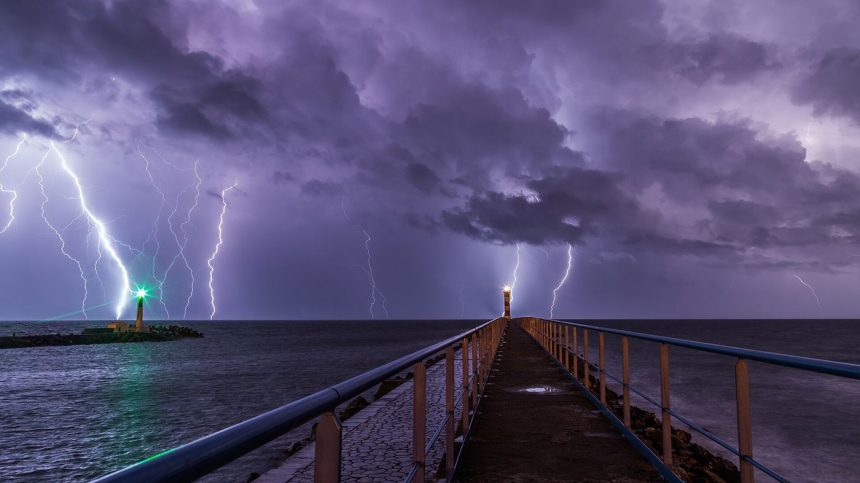
Every lightning flash announces itself in radio waves, and networks of ground sensors now listen for those signals to locate strikes within moments. When a flash fires, its electromagnetic pulse races outward and reaches several sensors at slightly different times; software compares the arrivals and calculates where the strike occurred. The resulting maps update continuously through a storm, showing where activity is intensifying, where it is moving and where it has stopped. Forecasters use the data to warn of severe weather, power companies watch for strikes near lines and equipment, and airports track storms approaching runways. What was once visible only to someone watching the sky is now measured as precisely as rainfall. The same live maps now appear in weather apps used by golfers, sailors, festival organisers and parents, bringing professional storm data into everyday decisions about staying outdoors.
What the Evidence Shows
The networks have improved as sensors, timing and computing have sharpened, distinguishing cloud-to-ground strikes, the kind that matter most for fire and safety, from flashes within clouds. That distinction helps fire services judge where new wildfires might smoulder after a storm passes, and helps investigators confirm whether a strike caused a particular outage or fire. Researchers also mine the archives, comparing years of strike data with rainfall and storm reports to understand how thunderstorms behave in different terrain and seasons. For the public, the most visible benefit is speed: warnings and all-clear decisions for outdoor events can rest on measured strike distances rather than guesswork about distant thunder. As coverage densifies in regions once unmonitored, forecasters expect the same benefits to reach communities that previously relied on watching the horizon and counting seconds after thunder. Reporting and analysis from sources such as IEEE Spectrum track the same developments, and specialists following lightning detection networks say the direction is now consistent across independent lines of evidence.
The Wider Context
Adoption of lightning detection networks follows a familiar pattern with an unfamiliar speed. Early users tolerate rough edges in exchange for advantage, mainstream users arrive when the tool disappears into existing workflows, and the market consolidates around whoever made that transition feel effortless. Vendors are racing less on raw performance now than on integration, support and trust.
What Happens Next
The realistic forecast for lightning detection networks is steady integration rather than sudden replacement: embedded in products people already use, improving in increments, and regulated in proportion to its reach. The companies and institutions that plan on that basis, training staff and redesigning processes instead of chasing launches, are the ones the adoption data tends to vindicate. You can follow related developments in our coverage of technology.
It is also worth remembering how quickly the picture in this area has changed before. Positions that looked settled a few years ago have been revised as new data arrived, and the same humility is appropriate now. The strongest coverage of this subject, and the most useful advice, tends to come from sources that update their views openly when the facts move, rather than defending an earlier position long after it has stopped fitting the evidence available.