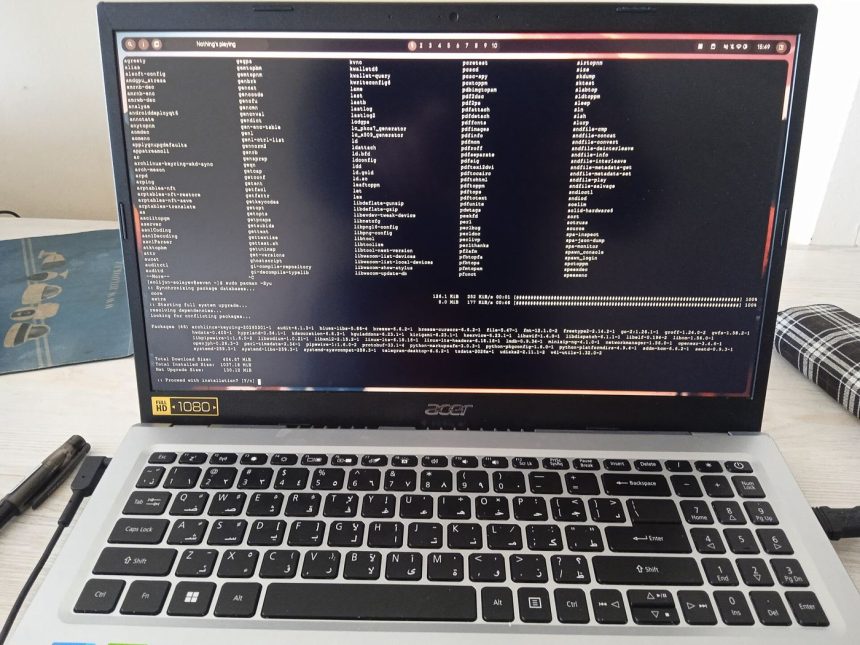
Kora Systems has announced Kora, an AI-focused Linux desktop operating system, with a launch planned for 2027. The company announced the system on 10 November 2026, describing a Linux foundation developed with Qualcomm Technologies for Snapdragon-powered personal computers. Kora says its Cortex inference engine schedules AI work across the central processor, graphics processor and neural processor on Snapdragon X2 Elite chips, and can extend that scheduling to other computers on a local network. The plan is to release an enterprise-focused version called HUMAIN OS first in 2027, followed later that year by Kora for developers and creators. Local AI models are the default, with cloud models used only when needed, according to the company’s description of the platform. The company has not yet shown pricing or a full list of supported apps, so early interest will depend on what developers can build with it.
What the Evidence Shows
The announcement matters because the desktop operating system market has been dominated by Windows and macOS for decades, and AI is giving challengers a new opening. A system built around local AI could appeal to users who want fast responses without sending their data to distant servers, and to developers who want to build AI features directly into their apps. Kora is entering a crowded field, with Microsoft and Apple adding AI throughout their own systems and several Linux distributions experimenting with similar ideas. The company will need to prove that its software runs the everyday apps people rely on, not just its own AI features. The first test will come when HUMAIN OS reaches enterprise customers in 2027, and developers get their hands on Kora later in the same year. Reporting and analysis from sources such as IEEE Spectrum track the same developments, and specialists following the Kora AI Linux operating system say the direction is now consistent across independent lines of evidence.
The Wider Context
Adoption of the Kora AI Linux operating system follows a familiar pattern with an unfamiliar speed. Early users tolerate rough edges in exchange for advantage, mainstream users arrive when the tool disappears into existing workflows, and the market consolidates around whoever made that transition feel effortless. Vendors are racing less on raw performance now than on integration, support and trust.
What Happens Next
The realistic forecast for the Kora AI Linux operating system is steady integration rather than sudden replacement: embedded in products people already use, improving in increments, and regulated in proportion to its reach. The companies and institutions that plan on that basis, training staff and redesigning processes instead of chasing launches, are the ones the adoption data tends to vindicate. You can follow related developments in our coverage of technology.
It is also worth remembering how quickly the picture in this area has changed before. Positions that looked settled a few years ago have been revised as new data arrived, and the same humility is appropriate now. The strongest coverage of this subject, and the most useful advice, tends to come from sources that update their views openly when the facts move, rather than defending an earlier position long after it has stopped fitting the evidence available.