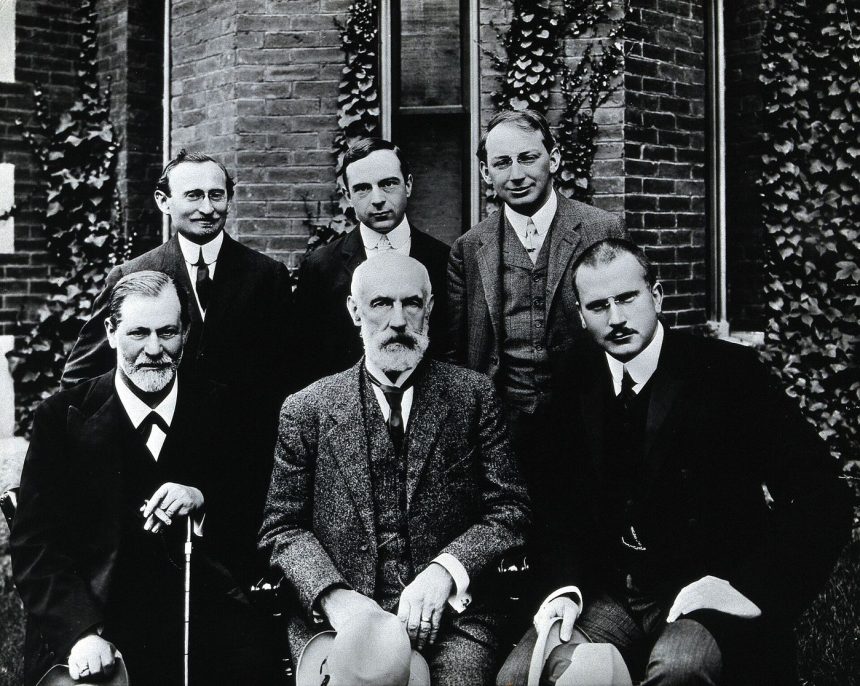
Carl Gustav Jung, a Swiss psychiatrist who had once been Sigmund Freud’s closest colleague, broke with Freud in 1912 and built a very different theory of the mind. Jung argued that beneath the personal unconscious, which holds our own forgotten memories, lies a deeper collective unconscious shared by all human beings. It is filled with archetypes, universal patterns and images that appear in the myths, dreams and stories of every culture. The best known archetypes include the persona, the mask we show the world, the shadow, the dark side we deny in ourselves, the hero, the mother and the wise old man. Jung believed that a healthy life means bringing these hidden parts of the personality into balance, a process he called individuation.
What the Evidence Shows
Jung developed his ideas through his work with patients, his study of mythology and religion, and his own vivid dreams, which he recorded in a private journal later published as The Red Book. His book Psychological Types, published in 1921, introduced the words introvert and extrovert, which have become part of everyday language. His ideas also shaped the Myers-Briggs personality test, one of the most widely used questionnaires in workplaces around the world. Critics say that archetypes are too vague to test and that Jung’s evidence came from interpretation rather than experiment. Yet his influence reaches far beyond psychology, into literature, film and art, where the hero’s journey and the shadow self remain powerful storytelling tools. His idea of the shadow, the part of ourselves we refuse to see, has become a common theme in novels, films and therapy rooms alike. Reporting and analysis from sources such as Nature Human Behaviour track the same developments, and specialists following Jung’s archetypes and the collective unconscious say the direction is now consistent across independent lines of evidence.
The Wider Context
The wider context is a discipline rebuilding confidence through replication and pre-registration, and findings on Jung’s archetypes and the collective unconscious are being reported with their effect sizes and limits attached. That honesty can make results sound smaller than the headlines of a decade ago, but the effects that survive are the ones practitioners can responsibly build on.
What Happens Next
What happens next in research on Jung’s archetypes and the collective unconscious is a turn toward real-world trials: longer, larger and conducted in the schools, workplaces and clinics where the findings are meant to apply. Psychologists are also studying individual differences more seriously, because average effects conceal the people for whom an approach works powerfully and those it leaves cold. Both shifts make the science slower and more useful. You can follow related developments in our coverage of psychology.
None of this will be settled by a single announcement, study or product launch. The pattern to watch is accumulation: independent confirmations, honest reporting of failures and steady improvement in the underlying numbers. Readers who follow those signals, rather than the loudest claim of the week, will understand this subject better than most of the commentary surrounding it suggests is possible.